
Invite Only
How an invite-only audio app taught me everything about connection, addiction, and the future of social media

I remember exactly where I was sitting when I got the Clubhouse invitation.
Dinner table. My son next to me. I looked over at him with that competitive edge only a mother and son can have and said, “I got an invite. Have you gotten one yet?”
He hadn’t.
This was early 2020, and Clubhouse was the most exclusive thing on the internet. Invite-only. iPhone-only. You couldn’t just download it and sign up like every other social app. You needed someone to let you in.
I’d met a woman in a Facebook entrepreneurship group—one of those groups you join thinking maybe this is where I’ll finally figure out how to start my business. She posted that she had a couple of invites. First come, first serve.
I asked. She said yes.
The exclusivity wasn’t an accident. It was the entire strategy.
When you joined, you only got one or two invitations to give away. Maybe three or four if you were lucky. This meant everyone on the app was connected by only one or two degrees of separation. Friends and friends of friends.
It created this intimate feeling from day one—like you’d been let into a private club where interesting people were having conversations you couldn’t have anywhere else.
The early adopters, the originals, were already inside testing and trying and talking. And now I was one of them.
The first thing you did was set up a profile. Very LinkedIn-like. Name, bio, profile picture. But here’s what I realized immediately: your name mattered.
I chose “Dr. Bev”
Not “Beverly Pell, PhD in Educational Leadership.” Not “Parent educator and digital literacy expert.” Just: Dr. Bev.
That title would open every door that followed. I started scrolling.
The interface felt like walking down a hallway at a conference. Each room had a title. Each title was a doorway. I could see who was inside—their profile pictures arranged in circles, like faces around a dinner table.
Some rooms had five people. Some had fifty. Some had hundreds.
I could tap on any picture and a notes page would pop up—basically their LinkedIn profile condensed into a few lines. Who they were. What they did. Their Instagram handle. Emojis to make themselves more searchable.
I clicked into a room.
Immediately, I was in the audience—my picture small, in the “listening lounge” at the bottom of the screen. On stage, there were nine larger profile pictures. These were the speakers. A thin gray circle appeared around whoever was talking.
One of them had a green star. That meant they’d opened the room.
Another had a green badge with a white asterisk. That was the moderator.
And I thought: This is brilliant.
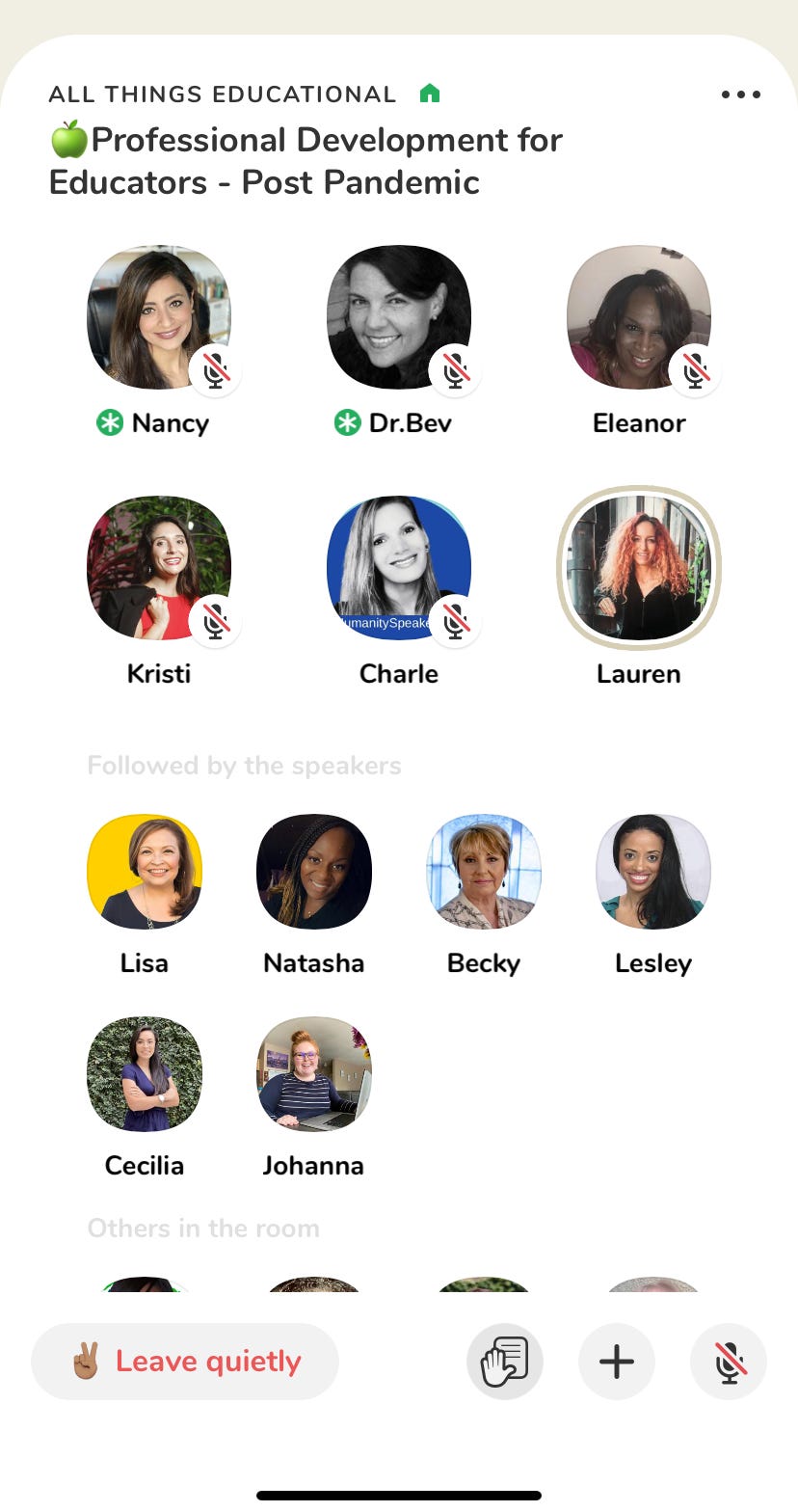
Within minutes, I was invited onto a stage.
Just like that. Someone tapped my picture, moved me up, and suddenly my microphone was live. I could speak. Hundreds of people—maybe thousands—could hear me.
The dopamine hit was immediate.
This wasn’t scrolling Instagram. This wasn’t commenting on LinkedIn posts. This was being seen. Being heard. Being invited into the conversation.
And I wanted more.
What made Clubhouse different:
You couldn’t lurk invisibly—your face was there
You used your real name—no avatars, no anonymity
Voice created intimacy text never could
Invitation was currency
Access felt earned, not given
I didn’t know it yet, but I was about to spend the next year of my life inside this app. I would meet people in London, Hong Kong, and Australia. I would get on stage with influencers and entrepreneurs I’d only read about. I would learn more about business in six months than I had in six years.
And I would completely lose myself in it.
But that first night, sitting at the dinner table with my son asking if he’d gotten his invite yet?
I just felt lucky to be in the room.
Over the next 14 chapters, I’ll tell you what happened next—the rooms that changed how I think about connection, the people I met at 4am across the world, and why I’m building DuoFeed based on everything Clubhouse taught me was possible.
Beverly Pell is the founder of DuoFeed, a mindful social media app designed to help you scroll less and connect more. She’s currently raising $29,000 from 1,000 founding members to bring DuoFeed to life. Join the founding members here before November 27th.